Four Generations Of Diabetes. It Stops With Me (Without Giving Up My Chai)
A 34-year-old data engineer was told he was too thin to worry. His own family history said otherwise. What he found was a sugar sensor almost nobody talks about, and a way to keep his mother's table exactly as it is.

What To Know
- Diagnosed prediabetic at 34, at 145 pounds, with a BMI of 22.0. The fourth generation in a row.
- His doctor's advice was to lose weight. There was no weight to lose.
- Found the reason South Asian bodies run this risk at sizes American medicine calls healthy.
- Learned that sweet-taste receptors do not only sit on the tongue. They line the gut, and they control how fast sugar gets in.
- A1c went from 6.1 to 5.6 in 90 days. The first normal retest anyone in his family has had. He still drinks his chai sweet.
The Message That Came Through At 2:14 In The Afternoon
I was in a meeting when my phone buzzed with a patient-portal notification. Lab results ready.
I opened it under the table, the way you do.
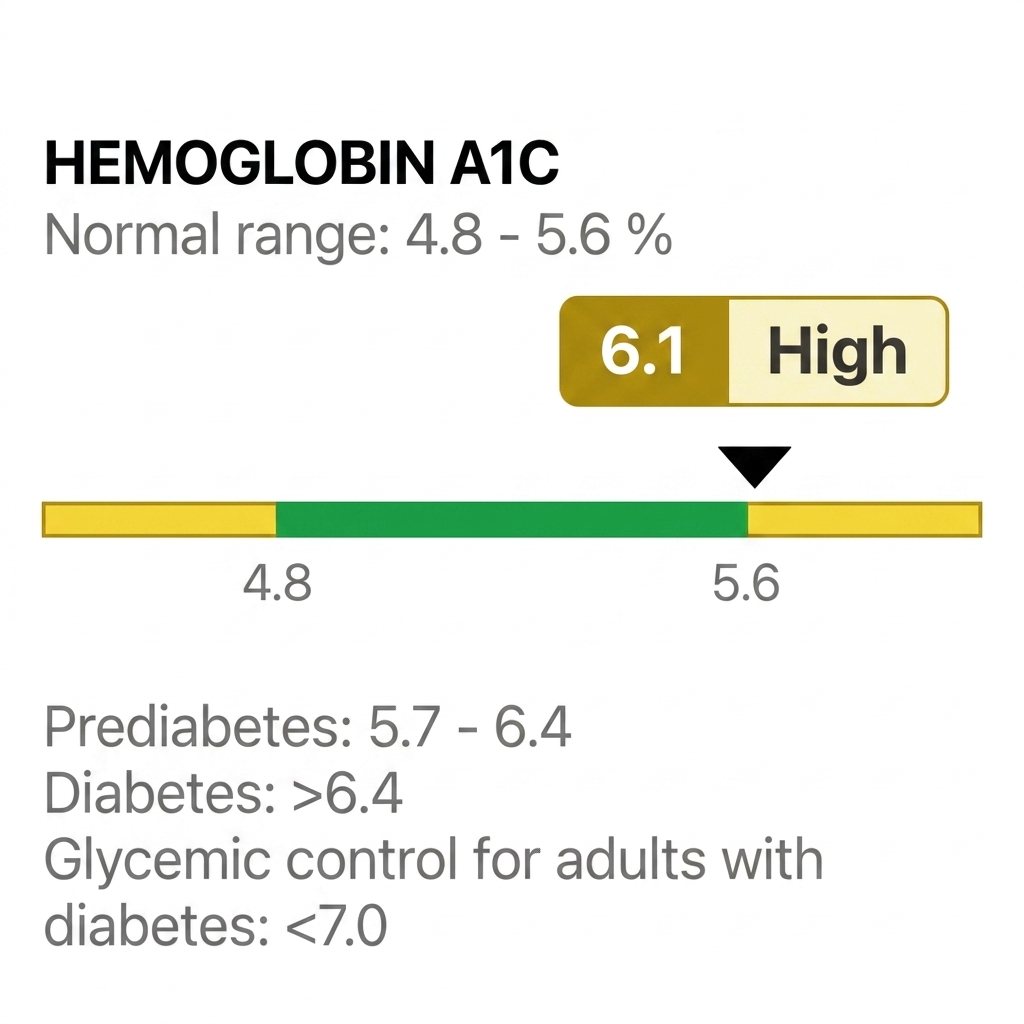
I read it four times. Then I did something I am not proud of. I finished the meeting. I went back to my desk. And I sat there for maybe twenty minutes without opening the app again, because part of me already knew what it said and did not want to see it a fifth time.
Here is the part that stung.
I analyze risk data for a living. Eleven years of it. My entire job is looking at large sets of numbers and finding the pattern that predicts a bad outcome before it happens. And I had never once run that analysis on the most obvious data set I own.
My great-grandfather died at fifty-six of what the family only ever described as weakness. My grandmother lost two toes to diabetes in Pune. My father has been on metformin for twenty-two years, and two of my uncles are on it now. In my family, it was never called a disease. It was just the thing that happens to us eventually. The family condition.
I was 34. I weighed 145 pounds. I ran three times a week. And I was next in line.
“You're Young. Just Lose A Little Weight.”
My doctor was kind about it. That is what made it worse.
He looked at the number, then at me, and told me it was borderline. Watch the carbs. Lose a little weight. Come back in a year.
I want you to sit with that for a second. I am five foot eight. I weighed 145 pounds. My BMI was 22.0, squarely in the middle of the range every chart calls normal.
Lose weight from where?
I left with a printout about portion sizes and the distinct feeling that I had just been handed advice written for somebody else's body. That feeling turned out to be literally true.
The Thing Nobody Told Me About Thin South Asian Bodies
I started reading. Not blogs. Actual studies, the way I would for work.
What I found reorganized everything.
There is a long-running study of South Asians living in America called MASALA. Its finding is blunt: South Asian adults develop type 2 diabetes at roughly 23 percent, against roughly 6 percent in white American cohorts.1
Not because we eat worse. Because of where our bodies put fat and how our cells respond to insulin.
Two people can weigh the same and carry that weight completely differently. Some of us store more of it viscerally, wrapped around the organs where you cannot see it and a bathroom scale cannot find it. There is a name for what I am, and I found it in a forum before I found it in a paper: thin outside, fat inside.
Then I found the detail that actually made me angry.
The American Diabetes Association recommends screening Asian Americans who have one or more risk factors for diabetes starting at a BMI of 23, rather than the 25 used for other adults.2 A family history counts as a risk factor. Mine is four generations deep. That guidance exists. It has existed for years.
Nobody had ever mentioned it to me. Not once, in any annual physical, in any of the years I sat on that paper-covered table being told I looked great.
I was not an outlier who slipped through. I was a category that the default advice was never built to catch.
The Advice That Was Waiting For Me Instead
Once I started asking, the advice arrived in two flavors.
The first was lose weight. We have covered that one. It was written for a body other than mine.
The second was worse. Cut out rice. Cut out roti. My aunt sent me a diet plan that suggested a half cup of rice per meal, as a serving size, to a family that eats rice every single night.
Who eats half a cup of rice?
I do not mean that as a joke. I mean that the entire structure of a meal in my mother's house is built around a shared table, and the advice on offer required me to sit at that table and eat differently from everyone at it, forever. That is not a nutrition plan. That is a slow exit from your own family.
I decided I was not doing that. Which meant I had to understand what was actually happening to the food, rather than just removing the food.
That decision is the only reason the rest of this article exists.
The Second Tongue
It took me three weekends and about forty papers to understand the next part. I am going to lay it out the way I wish someone had laid it out for me.
Start with something you already know. You have taste buds. The ones that detect sweetness are a pair of proteins that sit together, called T1R2 and T1R3. Sugar touches them, they fire, your brain gets the message: sweet.
Here is the part I did not know.
Those same two proteins are in your intestine.
Not something like them. The same receptors, sitting in the lining of your gut, where nothing has ever tasted anything.
Two papers went up in the Proceedings of the National Academy of Sciences on August 20, 2007. The lead author was Robert F. Margolskee, then a professor of neuroscience at Mount Sinai School of Medicine. One of them is titled, and I am not paraphrasing, “T1R3 and gustducin in gut sense sugars to regulate expression of Na+-glucose cotransporter 1.”
Here is how he described what they found:
Cells of the gut taste glucose through the same mechanisms used by taste cells of the tongue. The gut taste cells regulate secretion of insulin and hormones that regulate appetite. Our work sheds new light on how we regulate sugar uptake from our diets and regulate blood sugar levels. Robert F. Margolskee, MD, PhD · Professor of Neuroscience, Mount Sinai School of Medicine · 2007
Verified verbatim against ScienceDaily, “Your Gut Has Taste Receptors,” 21 August 2007. Quoted on the science only. Dr. Margolskee has no connection to Optimolin and this is not an endorsement.
When those gut receptors detect sugar arriving, they do two things. They tell your intestine to speed up sugar absorption, by moving more of a transporter called SGLT1 into position. And they trigger the release of your incretin hormones, including GLP-1, the same hormone the new weight drugs imitate. To be clear, nothing on a supplement shelf does what those drugs do. But it told me the gut was not a pipe. It was a control room.
It took me a week to actually accept that sentence.
Your gut tastes sugar. And what it tastes changes how fast that sugar gets into your blood.
I sat with that for a while. Eleven years of looking at what predicts a bad outcome, and I had never looked at the machinery deciding how fast my own breakfast hit my bloodstream.
Then I found the herb.
There is a plant that grows across central and southern India called Gymnema sylvestre. In Hindi it is called gurmar. The word translates, almost too neatly, as sugar destroyer. My grandmother would have known the name. I did not.
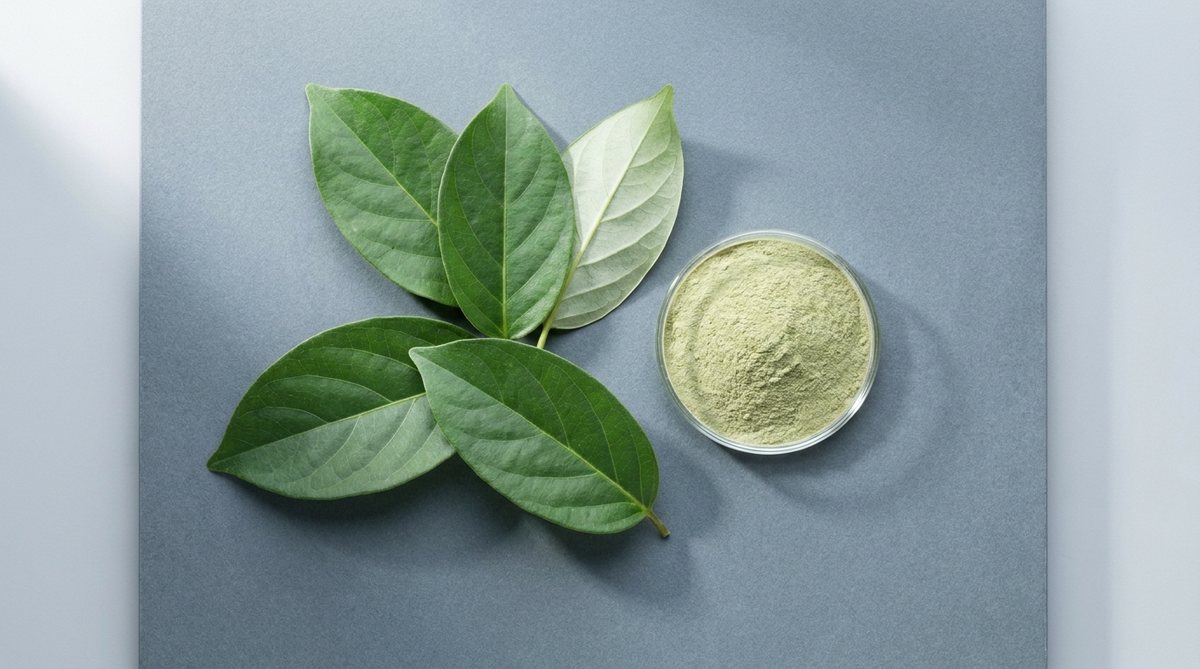
Chew a gurmar leaf and something strange happens. For the next half hour, sugar tastes like nothing. Like eating sand. This is not folklore, it is a documented effect, and it happens because the leaf contains a family of molecules called gymnemic acids. They are triterpenoid saponins, and their shape is close enough to a sugar molecule that they settle into the sweet receptor and occupy it. The receptor is full. Nothing else fits. In 2014, researchers modeled exactly how gymnemic acids dock into the transmembrane domain of the human T1R3 receptor.4
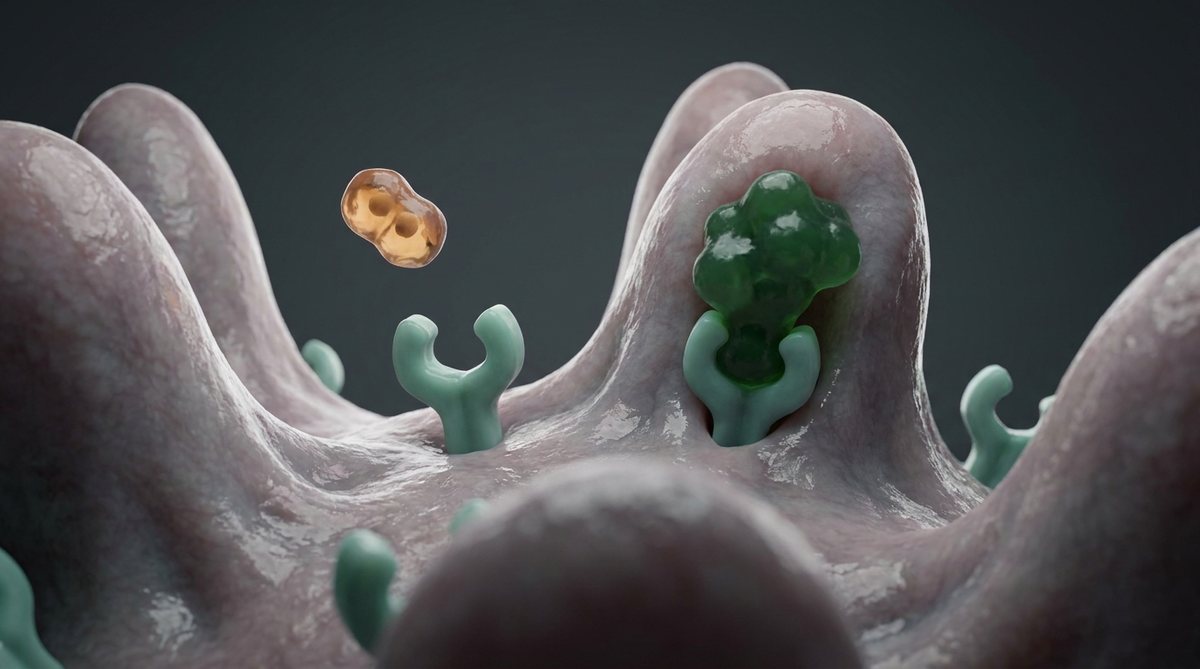
So gymnema blocks the sweet receptor on your tongue. And the same receptor sits in your gut.
Here is where I have to be straight with you, because this is where the research stops.
Studies in rat and guinea pig intestine show gymnemic acids suppressing glucose absorption directly at the intestinal wall.5 That is real, published, and repeatable. What nobody has done yet is measure it inside a living human intestine. So the honest sentence is this: the receptor is there, the molecule fits it, and in animal tissue it does what you would expect. Researchers believe the same thing happens in us. They have not yet watched it happen.
I decided that was good enough to try, and not good enough to pretend about. If you have read this far, you probably feel the same way.
One more thing, because if you are like me you have already skipped ahead to check.
The human trials on swallowed gymnema used 400 milligrams a day of a concentrated extract, and some used more. That is several times the amount in any everyday daily formula, including the one I settled on.
So let me not dodge that. If a formula is asking gymnema to carry the whole result on its own, then yes, the dose is the argument, and a low dose is a weak argument.
The reason I stopped caring about that comparison is that the trials were testing gymnema ALONE against a metabolic problem that is not alone. One ingredient, one lever, measured by how hard it could push. A formula built the other way is not trying to out-push those trials with a fraction of the dose. It is covering the gate, the cell, the post-meal wave and the load underneath, at doses meant to run together every day for years rather than to win a twelve-week trial.
That is a different bet, and you should know which one you are making.
And that gate is only the front door.
Here is the line I wrote in my own notes at the end of that third weekend, and it is the one thing I would want you to take away if you stopped reading now:
Slowing what comes in is a real lever. But it is only one. The sugar already circulating still has to be handled, and that is a different set of machinery entirely. Any single ingredient aimed at a multi-signal problem will reach one signal and stall.
Which is exactly what I ran into next.
Check AvailabilityAnd It Doesn't Stop There
Blocking the front door does nothing about what is already inside the house.
That was the flaw in every single-ingredient plan I looked at. Berberine forums told me to take berberine. Inositol forums told me to take inositol. Each one was arguing about one lever in a system that runs on several.
I ended up building a spreadsheet. Of course I did. Columns for each pathway, rows for each ingredient, and a column I could not fill for how many bottles and how many times a day.
Then I found a formula that had already done the assembly.
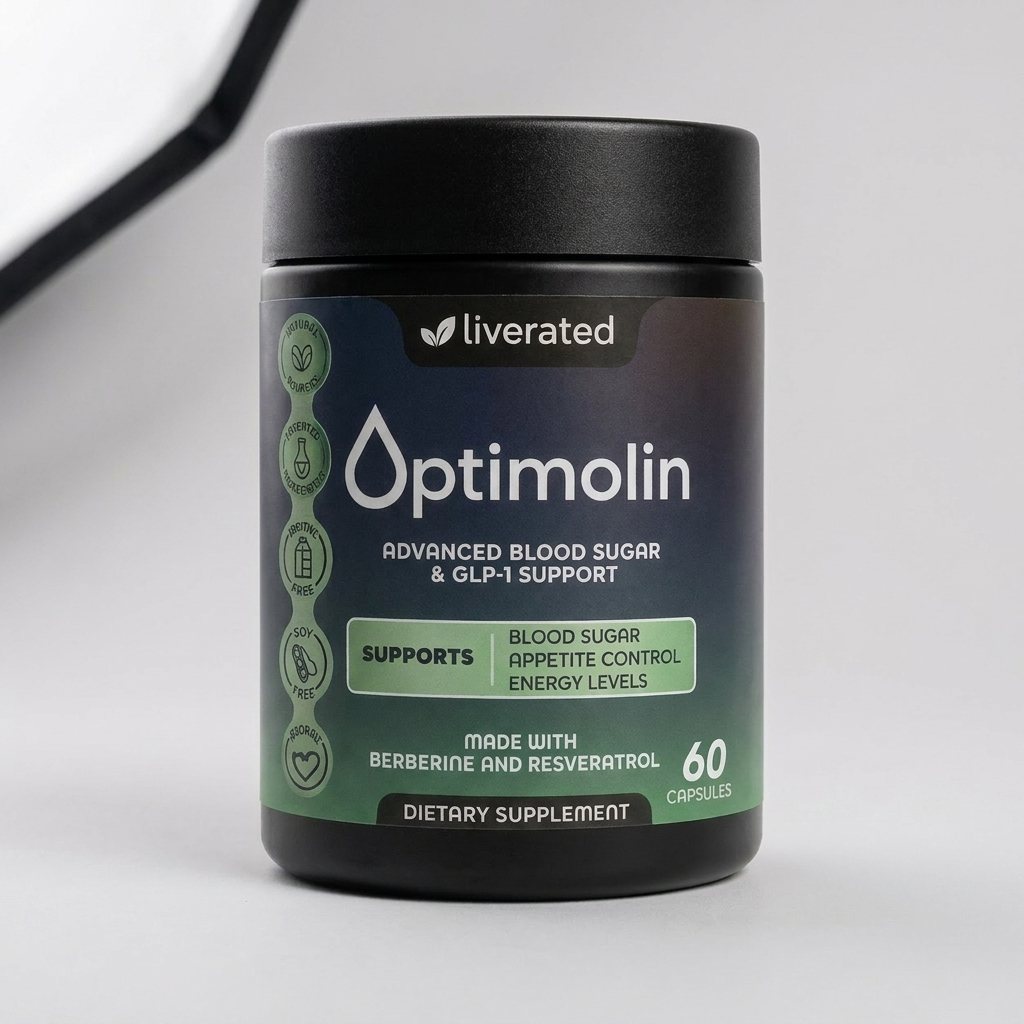
Optimolin puts nine ingredients into two capsules, taken once a day with the first meal. Not a proprietary blend. Every amount printed on the label, which for someone like me was the first credibility signal that mattered.
- Berberine, 450 mg standardized. The most-studied compound here, and it works downstream of everything gymnema is doing, at the level of how cells actually use energy.
- Myo-inositol and D-chiro-inositol. These sit inside the insulin signal itself. Think of them as part of how well a cell hears the message insulin is sending.
- Chromium. A cofactor in that same insulin signaling.
- Mulberry leaf. Works on the post-meal wave, in the same neighborhood as gymnema.
- Resveratrol and kalonji, the black seed my grandmother kept in a steel dabba. Both aimed at the oxidative and metabolic load underneath the whole picture.
- BioPerine. Does nothing on its own. Helps the others absorb.
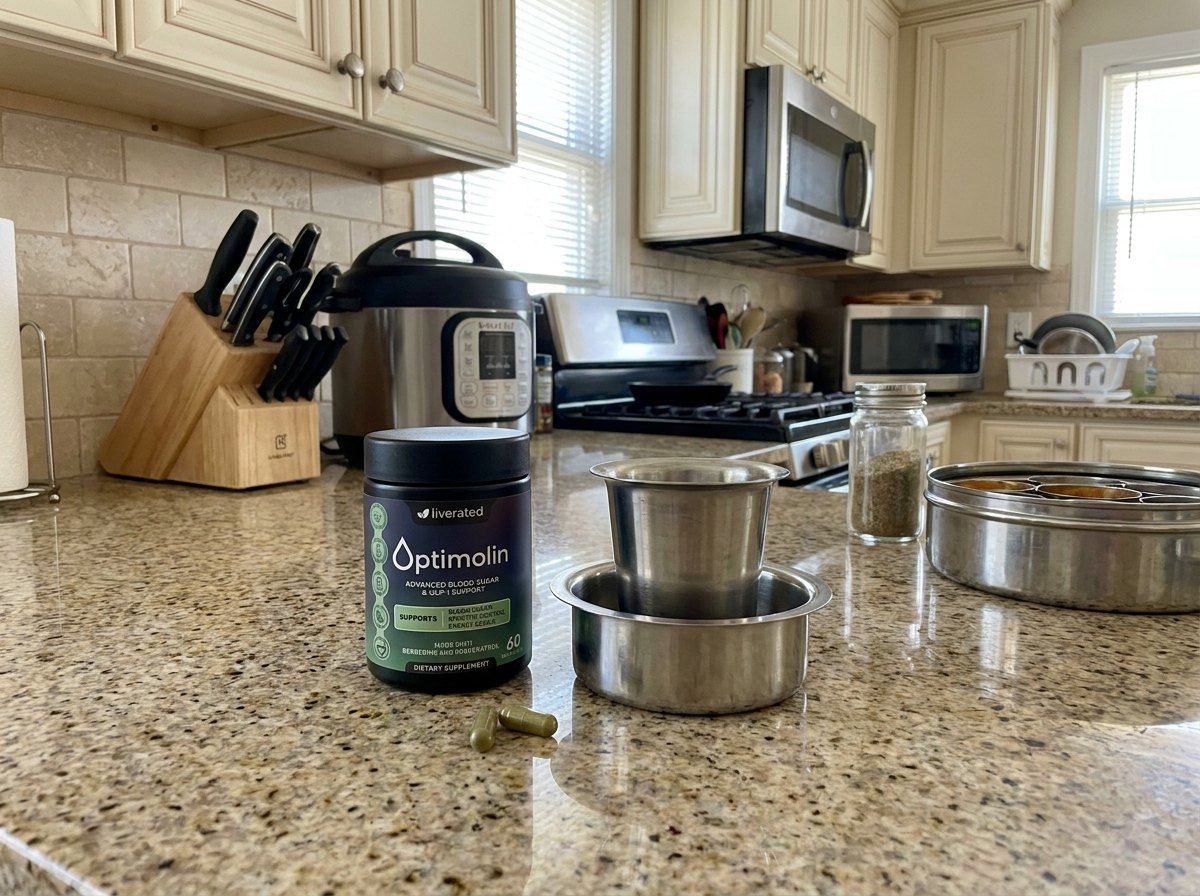
Gymnema was the door I came through. It was not the whole house.
What Readers Report
Since I started writing about this, the same three things come back at me in messages, in roughly this order.
The afternoon comes first. People describe the stretch after lunch differently, but they all describe it: the wall, the fog, the second coffee that does not work. It is the thing they notice changing first, usually somewhere in the third or fourth week.
The evening sweet urgency comes second, and people are more careful about how they describe it, because it is the one that carries shame. Nobody says their cravings vanished. They say it got quieter, or that they stopped finishing the box.
The third is the one I find most telling. It is that they stopped thinking about it. No powder to measure, no midday dose to remember, no shelf of bottles to audit. Two capsules with breakfast and the decision is done for the day.
Check AvailabilityI Tracked Everything. Here Is What Happened.
I am a data person. I was not going to run this on vibes.
I logged energy on a one-to-ten scale, three times a day. I logged every craving. I kept eating exactly what my family eats, including rice at dinner and two cups of sweet chai a day, because the entire point was to change the machinery and not the table.
One thing I want on the record, because it matters when you read the number at the end. I did not start a diet. But I did keep walking after dinner, which I had already been doing for two years, and I kept running three times a week. So this was not a capsule against a couch. It was a capsule added to a life that was already trying, and still losing.
Weeks 1 to 2. Honestly, nothing I would swear to. Maybe the afternoon was slightly less awful. I marked it as noise.
Week 3. The 3 p.m. wall stopped arriving. That is the clearest way I can say it. For years I had built my calendar around a stretch after lunch where I was functionally useless, and one Tuesday I noticed it was four o'clock and I had not thought about my own energy once.
Weeks 4 to 6. The evening thing changed. I used to eat dinner and then want something sweet with a specific urgency that felt separate from hunger. That urgency got quieter. Not gone. Quieter.
Week 9. My wife said I stopped napping on Sundays.
Day 90. I went back for the retest.
I sat in my car in the parking lot and called my father, and had to explain to him twice what the number meant, because in his generation nobody ever went back for a second test that said things had improved.
As far as anyone in my family knows, it is the first normal retest we have ever had.
Can I prove the capsules did that? No. One person is not a study, and I was walking and running the whole time. What I can tell you is that I had been walking and running for two years before this, and the number had never moved. The ninety days I added Optimolin are the ninety days it moved.
Check AvailabilityI'm Not The Only One
After I posted a version of this in a South Asian health forum, my inbox turned into something I did not expect.
From the mailbag
Not everyone wrote to agree. One physician told me I was overselling a mechanism that has not been demonstrated in humans, and he is right, which is why I said so above.
Ravi's Verdict
What it did for me: the afternoon crash, first and most clearly. Then the evening sweet urgency. Then a retest number I did not expect at 90 days.
What it did not do: it did not replace the walks after dinner, which I still take. It did not make my family history go away. And it is not a medicine, which matters if you are already on one. I told my doctor everything I was taking, and if you take prescription medication, so should you.
Who I would tell: anyone in our community who has been told they are fine because they are thin. That sentence is doing a lot of damage.
Where To Get It
People started asking me where to get it, which is not a question I expected to be answering. So here is what I know about it.
Optimolin is made in the USA under cGMP standards. Their page lists 4.9 stars, 30,000+ customers, and clinicians who recommend it.
It comes with a 60-day empty-bottle guarantee. Finish the bottle. If nothing changed for you, send it back and get your money back.
We hold a block of these for readers of this article, with the free-shipping first delivery and the gift included. When today's block is gone, this box comes down and the page reverts to standard pricing.
If you can still see this, it is still open.
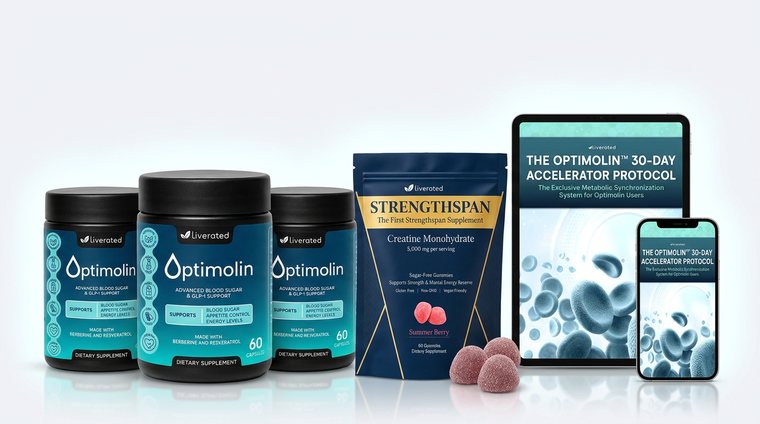
- Save $30.00 off the $207.00 retail
- 1 FREE bag of StrengthSpan gummies
2nd FREE bag of StrengthSpan- The 30-Day Accelerator Protocol, free
- Free USA shipping

- Save $41.40 off the $207.00 retail
- 2 FREE bags of StrengthSpan gummies
- The 30-Day Accelerator Protocol, free
- Free USA shipping, and your first delivery ships free
- Pause, skip or cancel anytime, no phone call
Two bottles also ship free within the USA; one bottle ships at $9.95. Neither includes the gifts, and both carry the standard 60-day guarantee. One bottle is 30 days, which is less than the window in which anything in this article changed.
Not for use during pregnancy or nursing. If you take prescription medication, talk to your doctor or pharmacist first.
One Last Thing
Last Thanksgiving I watched my father test his blood sugar at the kitchen counter before we ate. He has done it so many times that he does not look at his hands anymore while he does it. It is just a thing that happens before dinner in our family, like setting out the water glasses.
My daughter is six. She was standing right there, watching him, the way I used to watch my grandmother.
That is the part I could not stop thinking about. Not my own number. Hers.
Four generations is long enough for a thing to stop looking like a disease and start looking like a fact about who we are. It took a flagged lab result at 34 to make me ask whether it was actually a fact, or just a pattern nobody in my family had ever been given the information to interrupt.
I still drink my chai sweet. I still eat rice at my mother's table on Sundays.
My grandmother never got a choice about any of this.
I did.
See The Reader AllocationSources
- Kanaya AM et al. “Understanding the high prevalence of diabetes in U.S. South Asians compared with four racial/ethnic groups: the MASALA and MESA studies.” Diabetes Care 2014;37(6):1621–8. doi:10.2337/dc13-2656
- American Diabetes Association, Standards of Care, screening criteria for asymptomatic adults (BMI 23 cutpoint for Asian Americans with one or more risk factors; 2026 edition unchanged).
- Margolskee RF et al. “T1R3 and gustducin in gut sense sugars to regulate expression of Na+-glucose cotransporter 1.” PNAS 2007. doi:10.1073/pnas.0706678104. PMID 17724332.
- Molecular docking of gymnemic acids into the human T1R3 transmembrane domain. J Biol Chem 2014. PMID 25056955.
- Suppression of glucose absorption in rat and guinea-pig inverted intestine by gymnemic acids. J Vet Med Sci 1997;59(4):245–51. PMID 9152931.
These citations support the mechanisms described. They are not studies of Optimolin, and no clinical trial has been run on this formula. Dr. Margolskee is quoted on his published research only and has no connection to Optimolin.
These statements have not been evaluated by the Food and Drug Administration. This product is not intended to diagnose, treat, cure, or prevent any disease.
Individual results vary. Optimolin is a dietary supplement, not a medicine, and it is not a substitute for medical care, prescribed medication, sleep, or food. Not for use during pregnancy or nursing. If you take prescription medication, talk to your doctor or pharmacist before starting any supplement.
This article contains commercial links and this page earns a commission on orders placed through them.
The Health Investigator